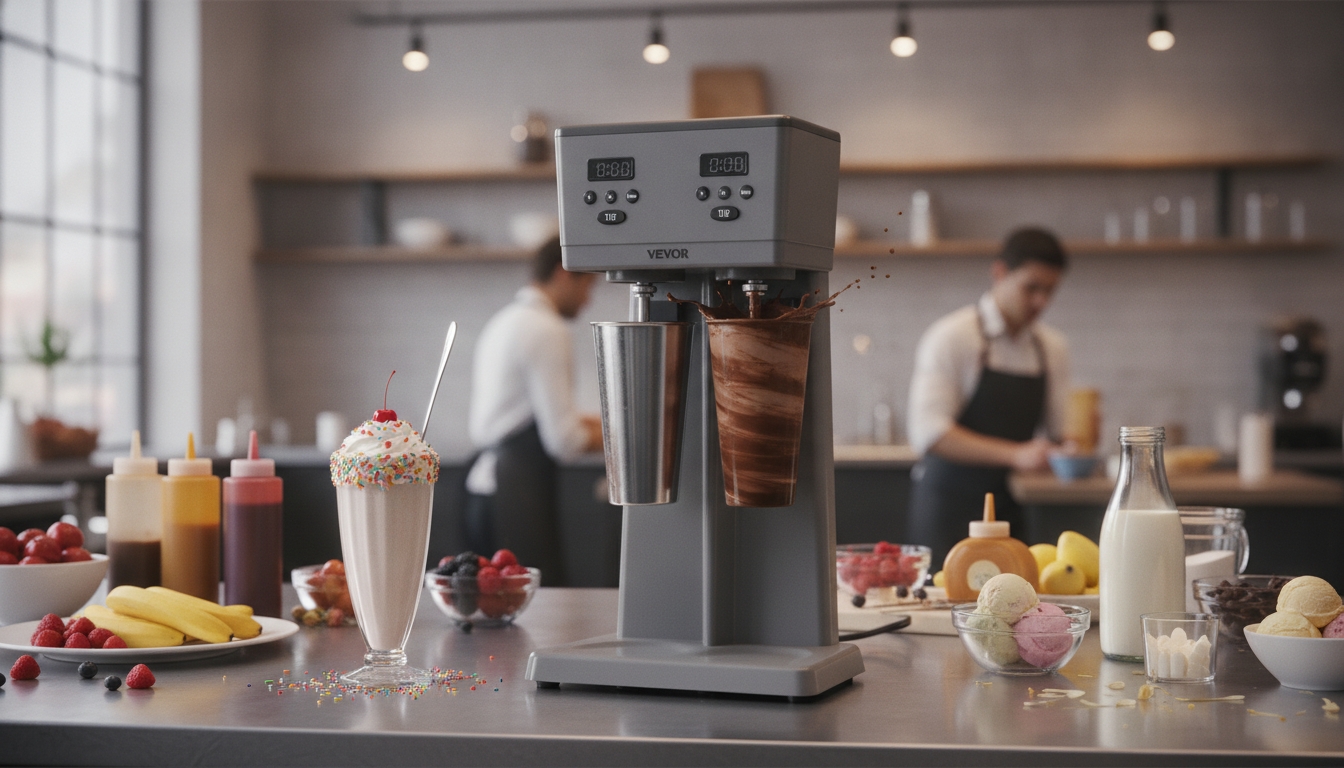
A dual-head milkshake mixer helps busy counters serve more drinks with consistent texture and less waiting. This style of machine is designed for repeated use, quick cup changes, and simple speed control so operators can handle classic shakes, malts, and thicker mix-ins without slowing down service. For cafés, diners, and dessert shops where shake orders come in bursts, two spindles can turn a bottleneck into a smooth, repeatable routine.
Dual-head mixers are built around one goal: throughput without sacrificing quality. Instead of running a single cup at a time, operators can keep orders moving and reduce idle minutes that add up during rush periods.
Specs look great on paper, but daily service demands practical features that hold up across hundreds of drinks. A good commercial unit supports pace, consistency, and cleanup—without making operators fight the machine.
Stability and vibration control matter more than many shops expect. Dense ice cream and mix-ins can cause chatter if the base is light, which can lead to messy counters, louder operation, and slower cup changes.
Three speeds may sound basic, but it’s often the most usable setup in real service—easy to teach, easy to repeat, and flexible enough for most menus. The biggest difference comes from how the speeds are sequenced, not just which speed is chosen.
For thick mix-ins, short bursts can be better than long, continuous high-speed mixing. Over-aeration can turn a premium shake into a foam-heavy drink that pours too fast and loses the rich, spoonable feel many customers expect.
Dual-head machines shine when the workflow is organized so each head stays productive. The simplest approach is to treat each spindle as a station with a predictable sequence: build, mix, finish, and swap.
| Scenario | How to run it | Outcome |
|---|---|---|
| Rush-hour classic shakes | Start cup A on low then medium; start cup B while A finishes | Two orders completed with minimal idle time |
| Thick mix-ins (cookies, candy pieces) | Begin low, move to high briefly, finish at medium | Better incorporation without over-whipping |
| Protein-style blends | Low to dissolve powders, then medium to smooth | Less clumping and fewer re-mixes |
Milkshakes are tough on equipment because dairy, sugars, and flavorings leave residue quickly. Faster cleanup protects flavor clarity, supports food-safety routines, and keeps service moving.
For guidance on safe food-handling practices and sanitation expectations, consult the U.S. Food & Drug Administration (FDA) Food Code and the CDC food safety resources. Always follow local regulations and the mixer’s care instructions for cleaning agents and contact times.
| Category | What to verify | Why it matters |
|---|---|---|
| Capacity | Dual heads available simultaneously | Improves order throughput |
| Control | 3 clear speed settings | Repeatable results and less training time |
| Sanitation | Removable or accessible mixing components | Faster cleaning and fewer flavor transfers |
| Stability | Solid base and low vibration | Cleaner counter and better operator comfort |
It’s worth it when shakes are a steady seller or rush periods cause backups. Two heads reduce waiting and let one person handle more orders without changing the basic build-and-mix process.
Lower speeds combine ingredients without splashing, medium is the everyday setting for smooth integration, and high speed helps with thicker mixes and quicker aeration. Too much high speed can make a shake overly foamy, so short bursts are often best.
Rinse and wipe food-contact areas between flavors, then do a deeper wash and sanitize at closing. Following local food-safety guidance and the machine’s care instructions helps prevent buildup from sugars and fats.









Leave a comment