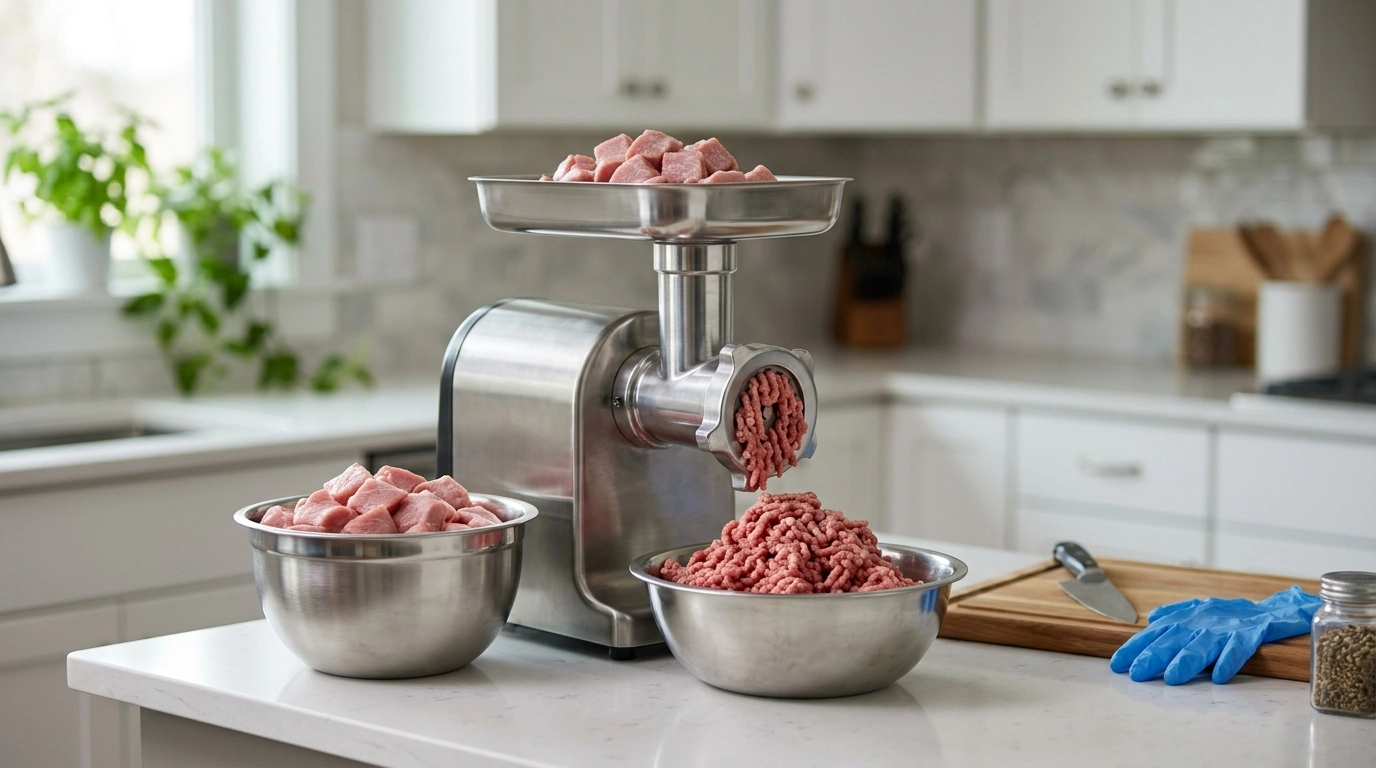
A high-power grinder can turn bulk prep into a faster, more consistent routine—whether for weeknight meal planning, sausage batches, or home-style burgers. An 1100W heavy duty electric meat grinder with commercial-style food processing capability is built for repeatable output: steadier grinding under load, quicker batches, and a workflow that feels less “stop-and-start” than smaller countertop units.
If you’re stocking the freezer, processing hunting-season trim, or simply prefer controlling fat ratio and texture, a machine like the Heavy Duty Electric Meat Grinder 1100W – Commercial Food Processor can help keep prep moving—especially when paired with the right technique and safe handling.
With any heavy duty meat grinder, real-world performance comes down to a few practical details—especially once you move beyond small, occasional batches.
| Feature | Why it matters | Best practice |
|---|---|---|
| 1100W motor | Helps maintain speed when grinding larger batches | Work in small, steady loads; pause if the housing warms noticeably |
| Reverse mode | Clears sinew and minor jams | Use briefly; then resume forward with smaller pieces |
| Multiple plates | Controls texture (coarse to fine) | Chill plates before use for cleaner cuts |
| Food-safe contact parts | Sanitation and longevity | Wash, dry fully, and store disassembled to prevent odors |
| Stable base/feet | Reduces movement and vibration | Place on a dry, level surface; avoid edge-of-counter setups |
“Clean” grinding is mostly temperature management and cutting efficiency. When meat warms up, fat smears; when parts are dull or packed too tightly, the auger struggles and the texture suffers.
High-power grinders shine when you treat them like a small batch-processing station: trim, chill, grind, portion, and clean—then repeat.
For handling portions and turning patties or links without tearing them, a simple accessory like Premium Stainless Steel Food Tongs – Multipurpose Kitchen & BBQ Utensil can help keep hands clean and reduce cross-contact while you work.
Most grinder “mystery issues” come down to residue, moisture, or dull cutting surfaces. A consistent post-grind routine helps avoid odors, oxidation, and texture problems in the next batch.
For sanitation principles and food-contact equipment cleaning guidance, reference the FDA Food Code. For ground meat handling best practices, consult the USDA FSIS guidance on ground meat and food safety.
For a batch-friendly setup built around higher power and steady throughput, the Heavy Duty Electric Meat Grinder 1100W – Commercial Food Processor is a practical fit for larger runs and repeat use.
Yes—1100W is typically strong for home batch grinding, especially when meat is trimmed, partially chilled, and fed at a steady pace. Features like reverse and overload protection also help manage sinew, minor jams, and motor strain.
Keep meat and grinder parts cold, use sharp plates/blades, and avoid over-pushing with the plunger. For finer blends, grind in two passes (coarse first, then fine) rather than forcing a single slow pass.
Unplug the grinder first, then disassemble and wash parts with hot, soapy water, sanitizing as appropriate. Dry completely and store parts disassembled; avoid the dishwasher unless the manufacturer explicitly lists components as dishwasher-safe.












Leave a comment