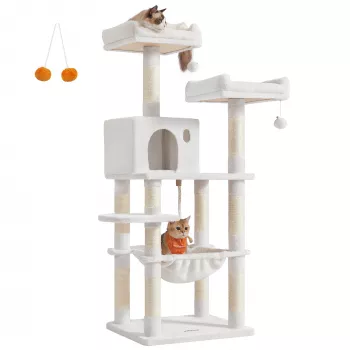
A 56-inch cat tree can turn a small corner into a vertical playground—offering climbing routes, nap spots, and dedicated scratching zones that help protect furniture. A multi-level design with posts, perches, and a hammock supports daily cat routines by giving them a reliable “up high” retreat, a place to stretch and scratch, and several ways to rest without taking over the whole room. Below is what this style adds to everyday life, what to check before setup, and how to keep it stable and inviting over time.
Indoor cats thrive when they can move vertically. A 56-inch height creates meaningful elevation for observing and resting, which can help cats feel more secure—especially in busy households where the floor level gets loud or unpredictable.
The best multi-level cat trees balance comfort with function. Posts should invite scratching, platforms should feel secure, and the hammock should be genuinely cozy—not flimsy.
| Feature | Why it matters | What to check before buying/assembling |
|---|---|---|
| Scratching posts | Supports natural scratching and helps protect furniture | Post height allows a full stretch; multiple posts for choice |
| Perches/platforms | Creates resting and lookout spots | Platforms are wide enough for your cat to turn and settle |
| Hammock | Cozy, secure napping area | Fabric feels sturdy; attachment points are tight after assembly |
| Base/stability | Prevents wobble and tipping | Base is broad; tree doesn’t rock when gently pushed |
| Materials/covering | Comfort, durability, and grip | No sharp staples; seams secure; surfaces provide traction |
| Placement | Boosts use and reduces stress | Near a window or quiet corner; away from hazards |
Even a medium-height tree feels “big” to a cat, so the footprint and surrounding clearance matter as much as the height. Before assembling, map out both the base area and the jump zones around it.
A cat tree is only as good as its stability. Energetic cats will launch onto the top tier at speed, and even a small wobble can discourage use over time.
For broader guidance on keeping cats healthy and safe at home, reputable references include the ASPCA’s cat care resources, the Humane Society’s enrichment and behavior tips, and the AVMA’s cat care information.
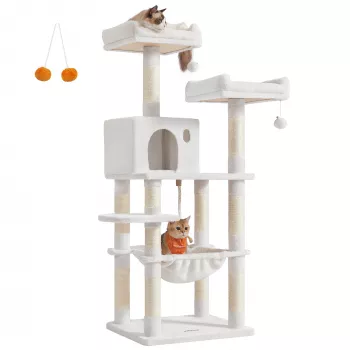
If you’re looking for a balanced height that feels “tall” to a cat but typically doesn’t require ceiling anchoring, consider the 56-Inch Multi-Level Cat Tree with Scratching Posts, Perches & Hammock. The multi-tier layout combines climbing routes, nap zones, and scratching areas so cats can alternate between play and rest throughout the day.
For households that also want to reduce cable clutter around play areas (and keep charging away from curious paws), a compact charger like the 45W GaN USB Fast Charger with PD & QC 3.0 for Phones & Tablets can help keep a tidy charging station tucked safely out of reach.
Yes—56 inches provides useful elevation for lounging and observation in most rooms. Platform spacing and overall stability matter just as much as height, especially for larger cats that need secure landings.
Place the tree near the item being scratched, reward your cat for using the posts, and make sure the posts allow a full-body stretch. Consistent, calm redirection builds the habit without creating stress.
Try adding a familiar blanket and offering treats near or inside the hammock for short sessions. Also check that the hammock is tight and supportive, and confirm the tree is in a calm spot where your cat feels secure.









Leave a comment