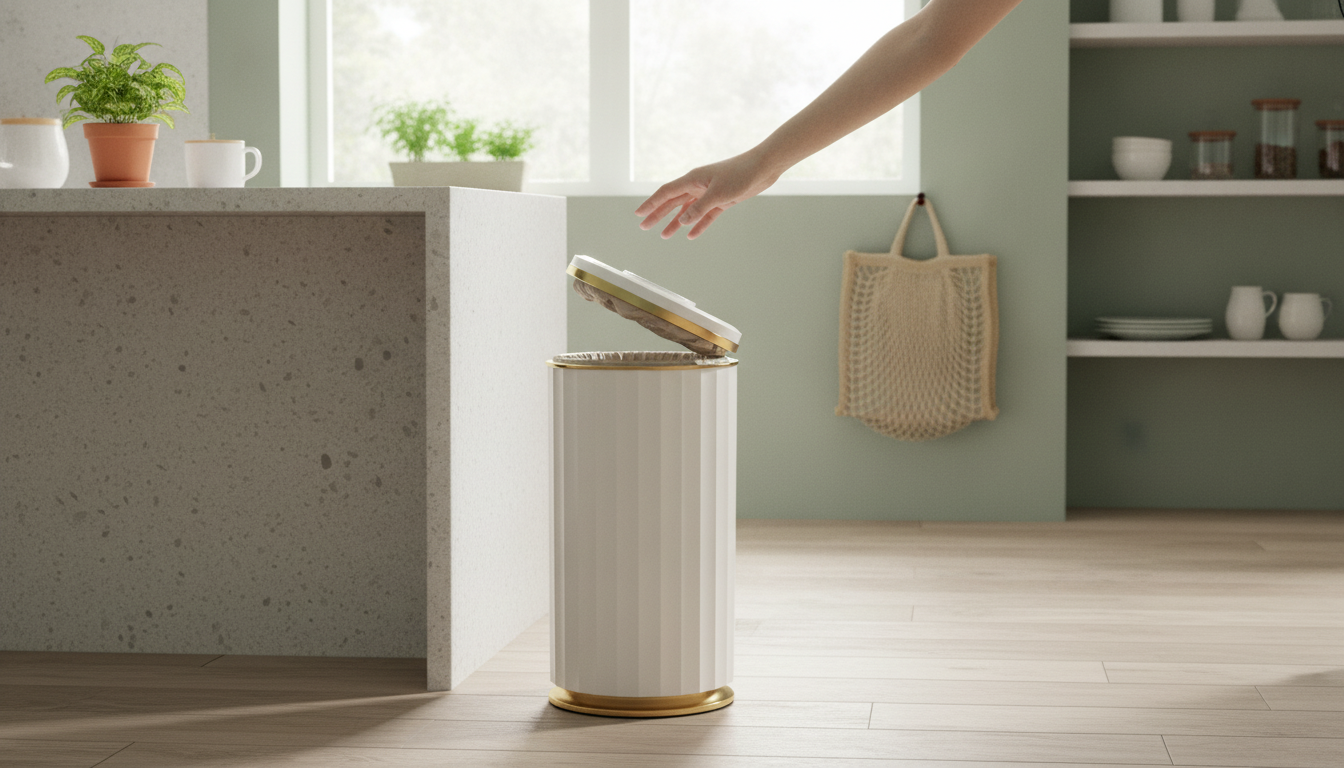
A touchless trash can makes everyday cleanup feel simpler by opening the lid automatically when your hands are full. Instead of reaching for a handle with sticky fingers, you get a quick, hands-free drop-and-go routine that can help reduce mess, odors, and contact with the lid. That combination is especially practical in busy kitchens, bathrooms, home offices, and shared spaces where the trash gets used all day.
If you’re upgrading your home setup, the Smart Touchless Sensor Trash Can – Eco-Friendly Electric Garbage Bin is designed to bring modern convenience to a spot you use constantly—without making the room feel cluttered or complicated.
Traditional bins rely on pedals, swing lids, or manual lifting. A touchless sensor trash can uses an electronic sensor to detect motion and open the lid for you. That difference sounds small—until you’re cooking, cleaning, or juggling a baby and realize how often you’d rather not touch the lid.
Reducing touchpoints also supports cleaner routines. Good hand hygiene still matters, of course, and it’s worth following evidence-based guidance like the CDC’s recommendations on when and how to wash your hands.
Touchless operation isn’t just a “nice-to-have” feature. In the right room, it can remove small frictions that slow you down or create extra cleanup.
For kitchen prep, pairing a touchless bin with tools that keep hands cleaner can make the whole routine feel more controlled. For example, Premium Stainless Steel Food Tongs – Multipurpose Kitchen & BBQ Utensil are handy for moving raw packaging or scraps without directly handling them.
An “eco-friendly” routine often comes down to consistency: less mess, fewer leaks, and fewer quick fixes (like double-bagging) that create extra waste. A sensor bin can support that by keeping the lid closed more reliably between uses and encouraging a cleaner disposal area.
It also helps to align your setup with simple waste-reduction principles such as the U.S. EPA’s guidance on Reduce, Reuse, Recycle.
| Goal | Simple setup step | Why it helps |
|---|---|---|
| Reduce bag waste | Use the correct bag size and avoid overfilling | Helps prevent tearing and the need to double-bag |
| Cut down on odors | Empty on a schedule and keep the lid area wiped | Odor control reduces the temptation to overuse air fresheners |
| Improve sorting | Place recycling/compost nearby (if used) | Makes correct disposal the easiest option |
Not all touchless bins behave the same in a real home. A good experience usually comes down to sensor tuning, lid movement, and how easy it is to maintain.
Even a well-designed sensor bin can act finicky if it’s squeezed into a tight corner or exposed to constant motion. A few placement tweaks can improve reliability and keep the lid opening smoothly.
The Smart Touchless Sensor Trash Can – Eco-Friendly Electric Garbage Bin is built for households that want less mess and less lid contact—without sacrificing a clean, modern look.
Sensor distance varies by model and by the room setup. For the most consistent activation, test a few placements and keep the sensor area clean and dry so it can “see” motion clearly.
They can support cleaner routines by reducing contact with a frequently touched surface. Regular handwashing and routine surface cleaning are still important, especially after handling food waste or bathroom trash.
Empty wet or food-heavy waste promptly, keep the interior dry, and wipe the lid edges where residue collects. If your bin design allows it, a gentle deodorizing method (like baking soda) can help without masking problems.












Leave a comment