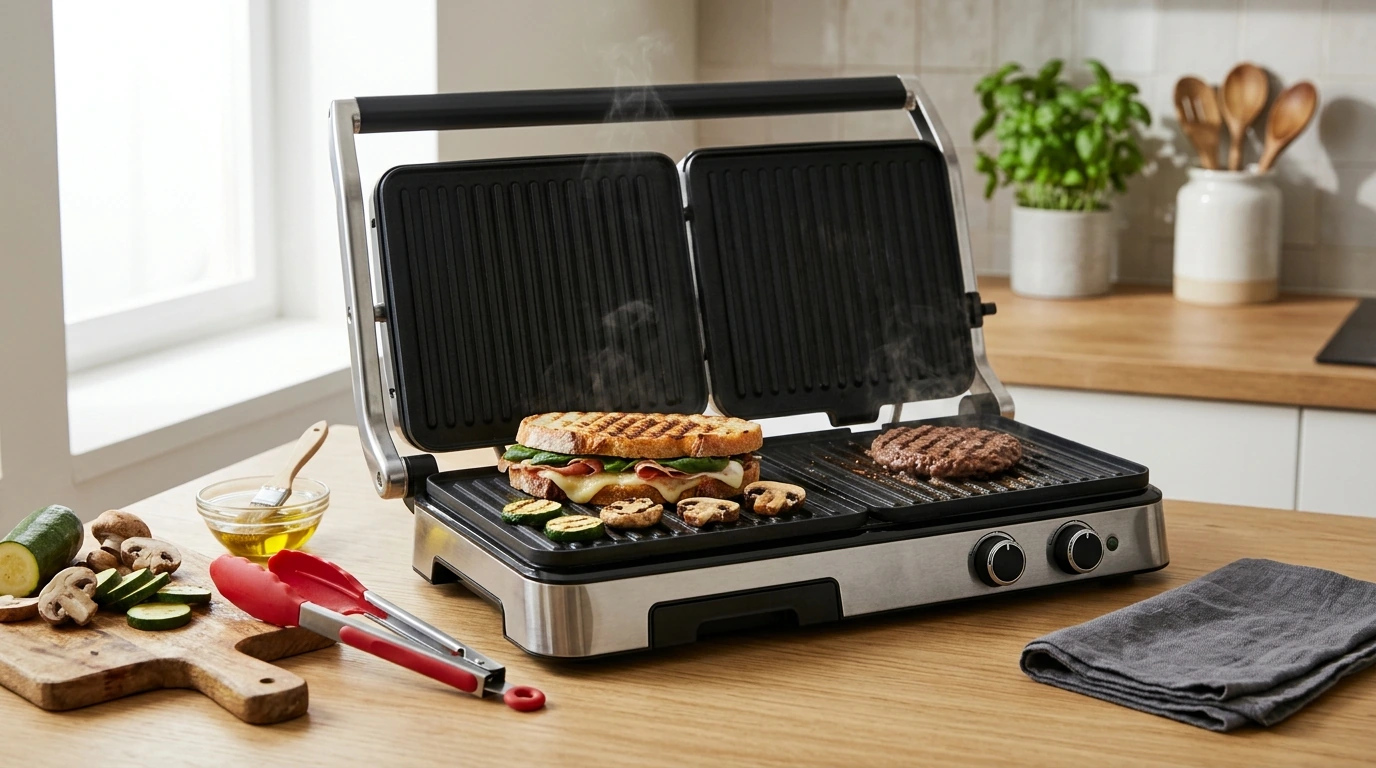
A good grill press should do more than toast bread. With a 180° opening for flat grilling, high power for fast heat-up, and non-stick plates for easier cleanup, this style of sandwich maker can handle paninis, quesadillas, burgers, vegetables, and quick weeknight meals without a full stovetop setup. If counter space is limited (or the stove is already busy), a dual‑mode press can deliver hot, browned results with less fuss and fewer dishes.
The biggest advantage of a 180° panini press is that it behaves like two appliances in one: a classic sandwich press when closed, and a compact flat grill when opened all the way. That flexibility makes it easier to match the cooking style to the food instead of forcing everything into “pressed sandwich” mode.
| Feature | Press mode (closed) | Open-flat mode (180°) |
|---|---|---|
| Best for | Paninis, grilled cheese, wraps | Burgers, veggies, bacon, meal prep |
| Texture | Compressed, crisp exterior | More like a flat grill sear |
| Capacity | Typically 1–2 sandwiches | Larger surface for multiple portions |
| When to choose | When fillings need heat-through and a tight press | When cooking items side-by-side or avoiding excessive compression |
Power isn’t just a spec on a box—it affects how quickly the plates recover heat and how well the surface browns food. A 1600W unit is geared toward faster preheating and steadier cooking, which helps when you’re doing more than a single sandwich.
For proteins, always cook to safe internal temperatures. The USDA provides a reliable reference chart for minimum internal temps, especially helpful when grilling chicken or burgers on a countertop unit: USDA Safe Minimum Internal Temperatures.
Non-stick grill plates are all about momentum: better release during cooking and less scrubbing afterward. They also make it easier to cook with less added fat while still getting appealing color on bread and proteins.
For general best practices around cleaning food-contact surfaces, the FDA Food Code is a helpful reference point for keeping cooking areas hygienic: FDA Food Code (Cleaning and sanitizing basics).
A grill press works fast once it’s fully heated. A small routine can make a noticeable difference in browning, filling texture, and how clean the plates stay afterward.
Once open-flat mode becomes part of the routine, the press can stand in for a quick grill pan—handy for small batches and weeknight sides.
For easier turning and serving—especially in open-flat mode—a set of sturdy tongs helps keep hands away from the hot plates. Pairing a press with Premium Stainless Steel Food Tongs – Multipurpose Kitchen & BBQ Utensil makes it simpler to flip vegetables or lift hot sandwiches without scraping the surface.
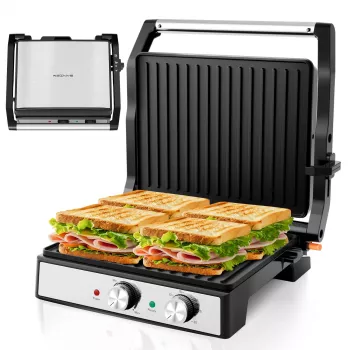
Panini Grill Press & Sandwich Maker with 180° Opening, 1600W Non-Stick Grill
| Item | Detail |
|---|---|
| Product | Panini Grill Press & Sandwich Maker with 180° Opening, 1600W Non‑Stick Grill |
| Power | 1600W |
| Cooking modes | Press (closed) and open-flat (180°) |
| Surface | Non-stick grill plates |
| Availability | In stock |
Yes—open it flat to 180° and cook foods side-by-side on the larger surface. It works well for vegetables, thin proteins, and cooking multiple portions with less crowding.
Preheat fully, avoid overly wet fillings, and lightly oil the bread exterior for faster browning. Use moderate pressure so steam can escape instead of soaking into the crumb.
Let the plates cool slightly, then wipe with a soft damp cloth or non-abrasive sponge. Avoid metal utensils and harsh scrubbers, unplug before cleaning, and never submerge the appliance body in water.









Leave a comment