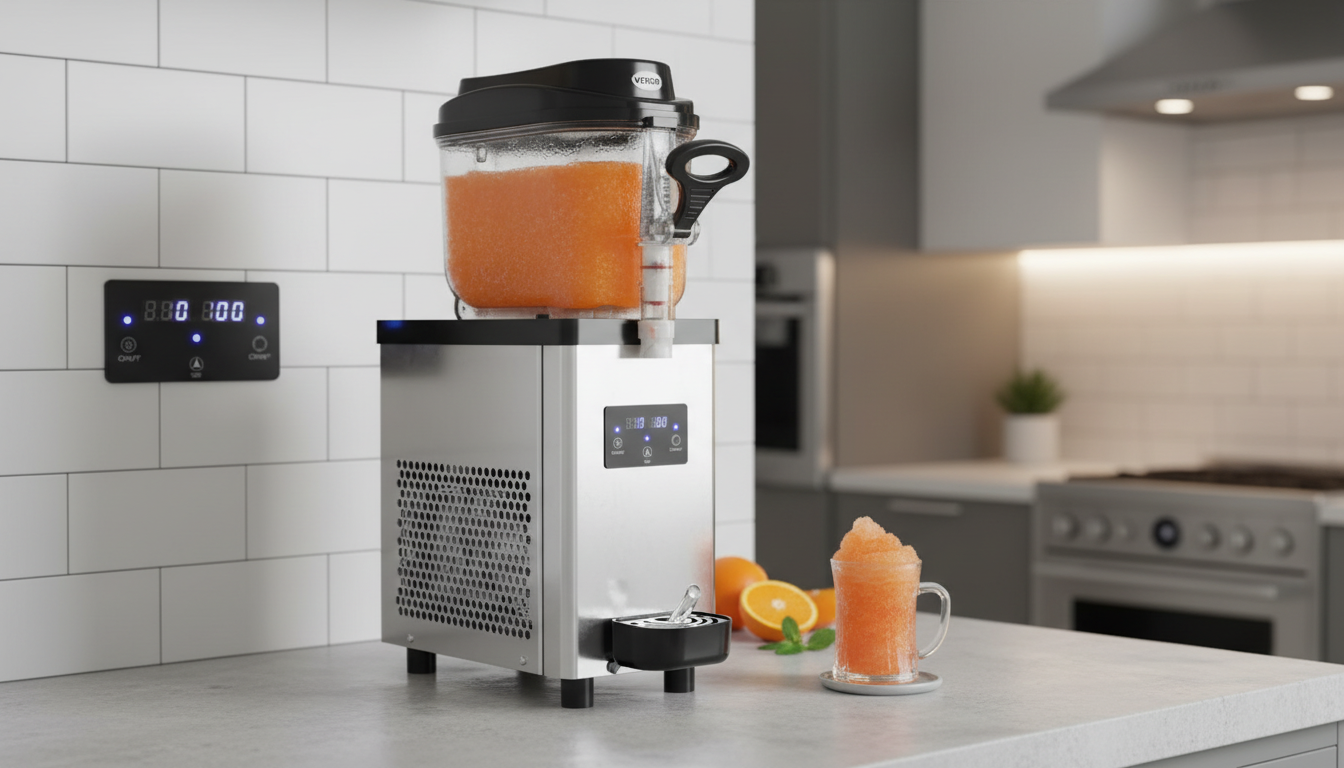
A commercial slushy machine can turn flavored mixes, juice blends, or cocktail bases into consistent frozen drinks throughout a rush—without constant attention from staff. The right setup depends on batch size, recovery time, footprint, sanitation workflow, and the types of beverages being served (non-dairy, dairy-based, alcohol, or high-sugar concentrates). For more guidance, see Best Slushie Machines for Frozen Drinks.
A commercial slushy machine creates semi-frozen beverages by chilling product while continuously agitating it. That movement helps prevent hard freeze, keeps texture smooth, and reduces separation that can happen when a mix sits still. For further reading, see UJR Slushie Machine | Official Website.
This style of frozen-drink station fits especially well in:
Many operators treat slush as a high-margin add-on: classic fruit flavors, lemonade slush, coffee slush, frozen mocktails, and seasonal limited-time offerings. Beyond the menu appeal, a machine standardizes texture and serving temperature across staff shifts, which helps reduce waste that comes from inconsistent freezing methods.
Specs look simple on paper, but they directly affect line speed, drink quality, and how often staff has to intervene.
| Decision factor | What to check | Why it matters |
|---|---|---|
| Daily volume | Estimated cups per day and peak-hour rush | Prevents runouts and watery product during busy windows |
| Menu type | Sugar content, dairy presence, alcohol use (if applicable) | Some bases freeze differently and may require different settings |
| Space | Counter dimensions and ventilation clearance | Improves cooling efficiency and reduces service issues |
| Staff workflow | Cleaning time, refill routine, part removal | Lower labor time and better sanitation consistency |
| Serving style | Self-serve vs. staff-serve, portion size control | Reduces mess, controls costs, speeds up lines |
Small operational habits make the difference between “perfect slush all day” and constant troubleshooting.
Frozen beverages are still food service, and sugary residue is quick to attract pests and create sticky buildup. A clean routine is also a performance routine: clean parts seal better, dispense better, and maintain consistent freezing.
For broader food safety guidance and equipment expectations, consult the U.S. Food and Drug Administration Food Code and review sanitation-minded equipment standards like NSF certification information.
| Item | Details |
|---|---|
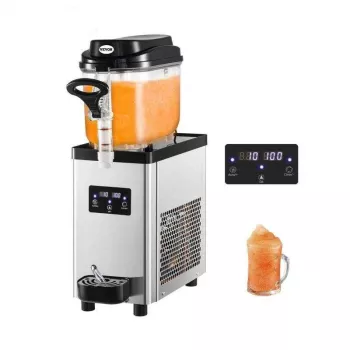
| Product | 6L Commercial Slushy Machine |
| Capacity | 6L |
| Availability | In stock |
| Product page | View product |
It varies based on starting liquid temperature, sugar concentration, batch size, and the machine’s cooling performance. Pre-chilling the mix and avoiding warm top-ups during peak service can noticeably reduce time to serving texture.
Common causes include incorrect dilution/sugar content, adding warm product mid-rush, poor ventilation around the unit, a dirty condenser restricting airflow, or thickness settings that need adjustment. Confirm mix ratios first and keep vents clear so the machine can shed heat efficiently.
Follow local health rules and the manufacturer’s guidance; many operations do daily wipe-downs plus regular disassembly and sanitizing. Clean between flavor changes and any time contamination is possible to prevent carryover and maintain safe service.











Leave a comment