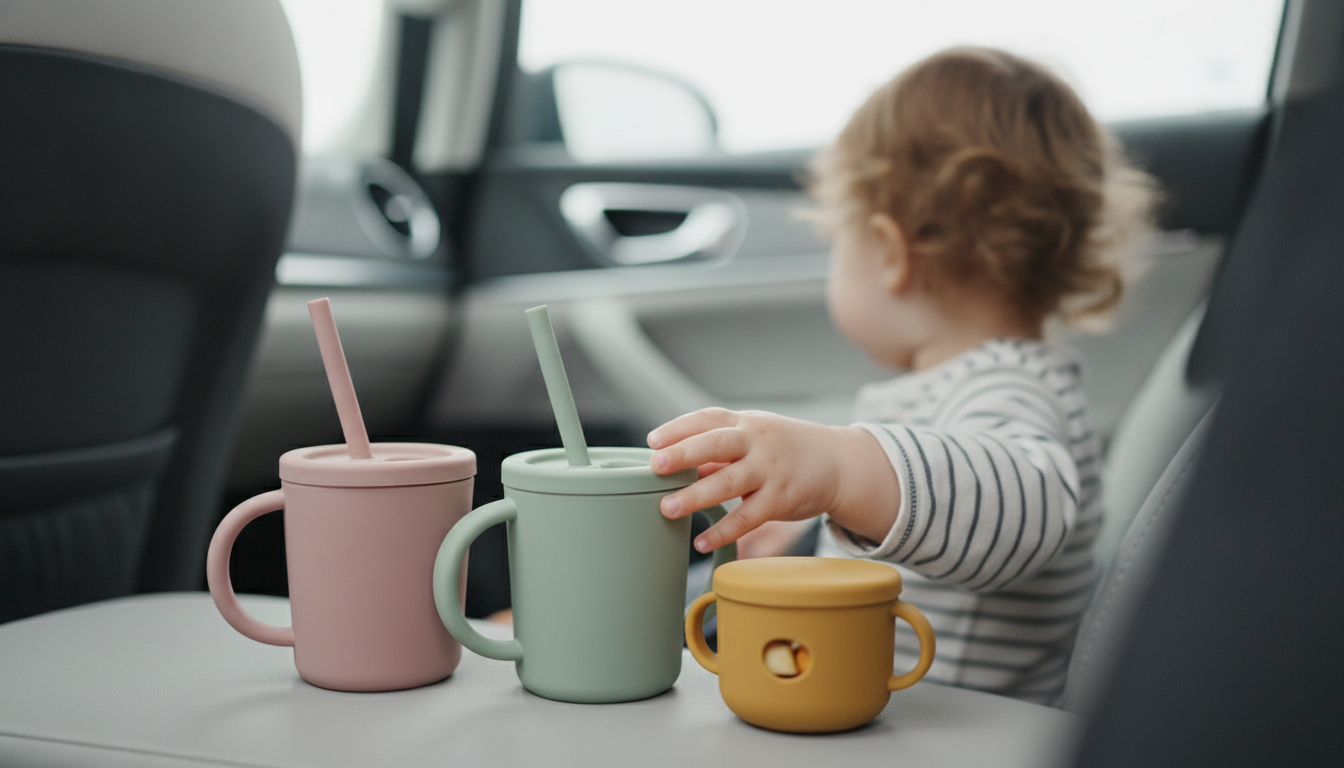
The best non toxic straw cups for toddlers are made with safer materials (like stainless steel, silicone, or glass) and clearly labeled plastics that avoid common chemical concerns. Look for cups that are simple to clean, truly leak-resistant, and sized for small hands, since a “safe” cup still needs to be practical for everyday use.
Material first: Stainless steel and food-grade silicone are popular choices for families trying to limit plastic contact with drinks. If you choose plastic, look for brands that specify BPA-free and are transparent about testing and materials (often Tritan or PP).
Straw design and cleaning: Mold tends to hide in valves, bite pieces, and long straws. Choose a cup with fewer parts, a straw that can be fully removed, and compatibility with bottle brushes or straw cleaners.
Leak resistance without constant frustration: Many “no-spill” designs use tight valves that toddlers struggle to sip through. A good cup strikes a balance: secure enough for bags and car seats, but easy enough to drink from without biting hard.
Fit and function: Lightweight cups with handles (or a slim body) help toddlers grip independently. A protective straw cover can be helpful for travel, but make sure it opens easily and doesn’t trap moisture.
Stainless steel: Durable, often insulated, and great for cold drinks. Check that the straw/sipper components are food-grade silicone.
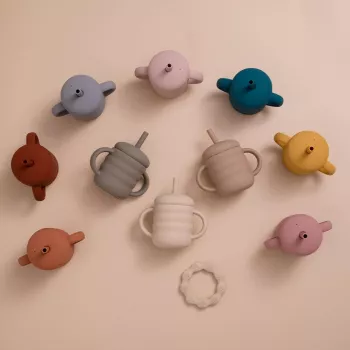
Silicone: Soft on gums and teeth, usually dishwasher-friendly, and less likely to crack when dropped.
Glass (with a silicone sleeve): Very clean-tasting and easy to sanitize, but heavier and not ideal for every outing.
For specific brand picks, pros/cons, and what to avoid, see the full guide here: https://lavishtree.com/what-are-the-best-non-toxic-straw-cups-for-toddlers/.
Disassemble every part daily, scrub the straw and valve with a small brush, and let everything dry fully before reassembling. If the cup has hard-to-reach pieces, consider switching to a simpler design.









Leave a comment